

 US Dollars
There are no products listed under this category.
Professional A/C Service: Beyond Basic Recharging
Modern automotive air conditioning service requires more than simple refrigerant recharging. Professional shops need comprehensive equipment to perform complete A/C system diagnostics, recovery, recycling, and recharging operations. Proper A/C service equipment allows technicians to work more efficiently, reduce comeback rates, and expand service offerings to include both older R-134a systems and newer R-1234yf refrigerant systems introduced in vehicles since 2015.
Key Considerations When Selecting A/C Equipment
- Refrigerant Compatibility: Determine whether you primarily service older vehicles using R-134a or newer models requiring R-1234yf refrigerant. Some equipment offers dual-gas capability for shops servicing diverse vehicle fleets.
- Recovery and Recycling Capabilities: Professional A/C service machines should offer full recovery, recycling, and recharging functions to comply with environmental regulations and maximize efficiency.
- Shop Space Requirements: Mobile A/C service carts with integrated casters provide flexibility for shops with limited bay space, allowing equipment to be stored when not in use and positioned as needed.
- Automation Features: Modern A/C machines may include automated functions, digital displays, and connectivity features that reduce service time and improve accuracy compared to manual operations.
- Service Volume: Consider your shop's typical A/C service volume when selecting equipment capacity and features. Higher-volume shops may benefit from faster cycle times and larger refrigerant storage.
Essential A/C Service Tools Beyond Machines
Complete A/C service capabilities require supporting tools and accessories alongside recovery/recharge equipment:
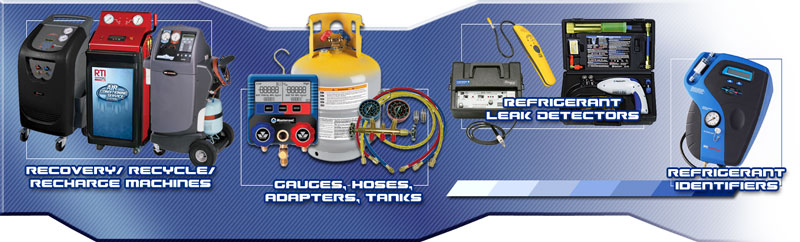
- Leak Detection Equipment: Electronic leak detectors, UV dye kits, and inspection tools help identify system leaks before recharging
- Manifold Gauge Sets: Diagnostic pressure gauges monitor system performance and refrigerant levels during service
- Hoses and Adapters: Quality service hoses and vehicle-specific adapters ensure proper connections across different makes and models
- Vacuum Pumps: Deep vacuum capability removes moisture and air from A/C systems before recharging
- Refrigerant Identifiers: Verify refrigerant type and purity before connecting equipment to prevent cross-contamination
- Flush Equipment: A/C system flush kits remove contaminants after compressor failure or major component replacement
Benefits of Complete In-House A/C Service
Shops that invest in comprehensive A/C service capabilities gain several competitive advantages:
- Control the entire service process from diagnosis through repair completion
- Reduce turnaround time by handling A/C work alongside other services
- Ensure quality by using preferred parts and following proper procedures
- Increase customer satisfaction through convenient one-stop service
- Generate additional revenue streams, particularly during peak cooling season demand
- Build customer loyalty by offering complete automotive service solutions
Important Note: Automotive A/C service requires proper EPA certification under Section 609 of the Clean Air Act. Technicians must be certified to purchase refrigerant and perform A/C service work. Always follow manufacturer service procedures and environmental regulations when working with automotive refrigerants.
Specifications vary by model. Always check individual product listings and manufacturer documentation for exact details regarding refrigerant compatibility, storage capacity, cycle times, and technical capabilities.
Automotive Air Conditioning Tools & Equipment
No matter how well you or your customer's car air conditioner works right now, like any machine, they need regular maintenance and care. The time will come when you need to check for leaks, make simple or complex repairs, monitor systems, and much more. With summer lingering longer and longer every year, ensure you're prepared to beat the heat with the proper AC equipment to keep vehicles cool as you service them year round.
 |
 |
Please click on one of the subcategory links above.
Shop everything you need to repair and maintain your air conditioner in one convenient spot with Best Buy Auto. Seasoned mechanics can find equipment to suit their needs in our large inventory, including pumps, hoses, and adapters typically needed for the larger and more powerful cooling units. If you're a novice car enthusiast looking to make smaller repairs on your vehicle's air conditioning, we have AC equipment for you too! Check out some of our handy tools like valve core installers, pressure replacement gauges, thermometers, and so much more.
Anyone can get ready to beat the heat with equipment featuring Robinair's Dial thermometer, UV dyes, and vacuum pumps. While some accessories aren't necessary for regular maintenance, they can bump up the productivity and longevity of your car's air conditioner and save you money and time. Products like Robinair Premium High Vacuum Pump Oil maintains maximum viscosity improving operating efficiency and cold weather starts for your vacuum pumps and can be shipped in individual units or in bulk to save even more. Our wide array of equipment ranges from tools to fix a broken AC machine to maintenance products and add-ons.
Whether you're an individual with a passion for all things automotive or a successful shop owner, our air conditioning equipment inventory can accommodate your unique needs. For over 85 years, we have been working to share our expertise in the automotive industry and offer access to the widest variety of top-quality automotive products at the very best prices. If you have any questions about air conditioning equipment, please give us a call, and one of our knowledgeable team members will be happy to assist you!
Frequently Asked Questions
What liquid do I need for car AC?
The liquid you will need for your car's AC is refrigerant. This is a specially formulated mixture that is created to transform hot air into cold hair by absorbing and releasing heat. Refrigerant is also known as Freon, and the most common Freons are R-12, R-134A, and HFO-1234yf. R-12 was banned in the mid-1990s after it was discovered to be depleting our planet's ozone layer.
What components are included in air conditioning equipment?
The air conditioning equipment you can find in your vehicle is made up of compressors, condensers, evaporators, orifice tubes or expansion valves, and an accumulator or receiver-drier. These all play a different role within your AC system. Refrigerant is required to remove hot air and moisture. The vehicle's compressor compresses the refrigerant into a liquid, putting it in a high-pressure state. Because of this pressure, the liquid is forced out of your compressor and into the hoses within your AC hose assembly to carry the refrigerant through the system.
 WARNING: These products can expose you to metals/chemicals including gas or diesel fumes, which is [are] known to the State of California to cause cancer, and gas or diesel fumes, which is [are] known to the State of California to cause birth defects or other reproductive harm. For more information go to www.P65Warnings.ca.gov